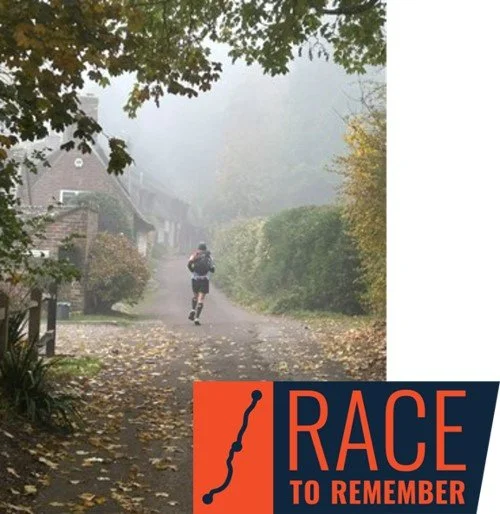
From a foggy start in Aldershot to an unforgettable finish at HMS Victory.
Seventy-six kilometres. My first ultramarathon. A journey from Aldershot Army Barracks to Portsmouth Naval Base, with the South Downs standing between the start line and the finish. The Combat Stress Race to Remember promised to be my longest run yet—and a step into the unknown. As it turned out, a few wrong turns would make it longer still…

Sixteen weeks to the start line
An ultra had been on my mind for some time, but I didn’t commit until August. That left sixteen weeks to prepare. Training became a mix of long, steady runs, intervals to sharpen my speed and hill repetitions wherever I could find them. Time on my feet was crucial: I averaged around eighty kilometres a week, supported by two or three strength and conditioning sessions. I arrived at the start injury-free—and very grateful for it!
Into the fog—and a few wrong turns
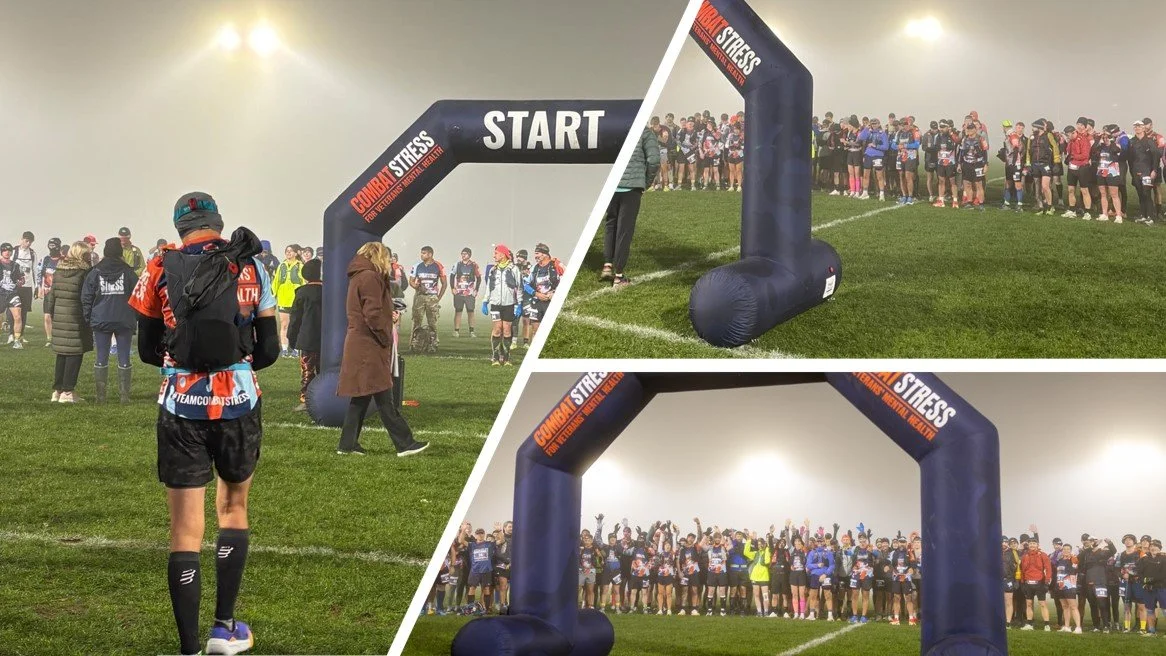
At 5:15am, around two hundred runners gathered in a cold, fog-bound Aldershot. After a kit check, a satellite tracker for each runner and a briefing, we were off. The field soon spread out, leaving the occasional word between runners and the sound of running shoes on tarmac. In the darkness and fog, the route signs were harder to spot than I had expected. A few early wrong turns taught me a quick lesson: just as in open-water swimming, don’t assume the athlete in front knows the way!
Heading south through the stunning South Downs National Park, I settled into a good rhythm. I moved comfortably through the first two stops, with a plan for each and my amazing family waiting with the next pack of nutrition. At Petersfield, the midway point at 36km, I discovered I was lying third. Third! For my first ultra, it was an incredible boost.
A big climb and a welcome surprise
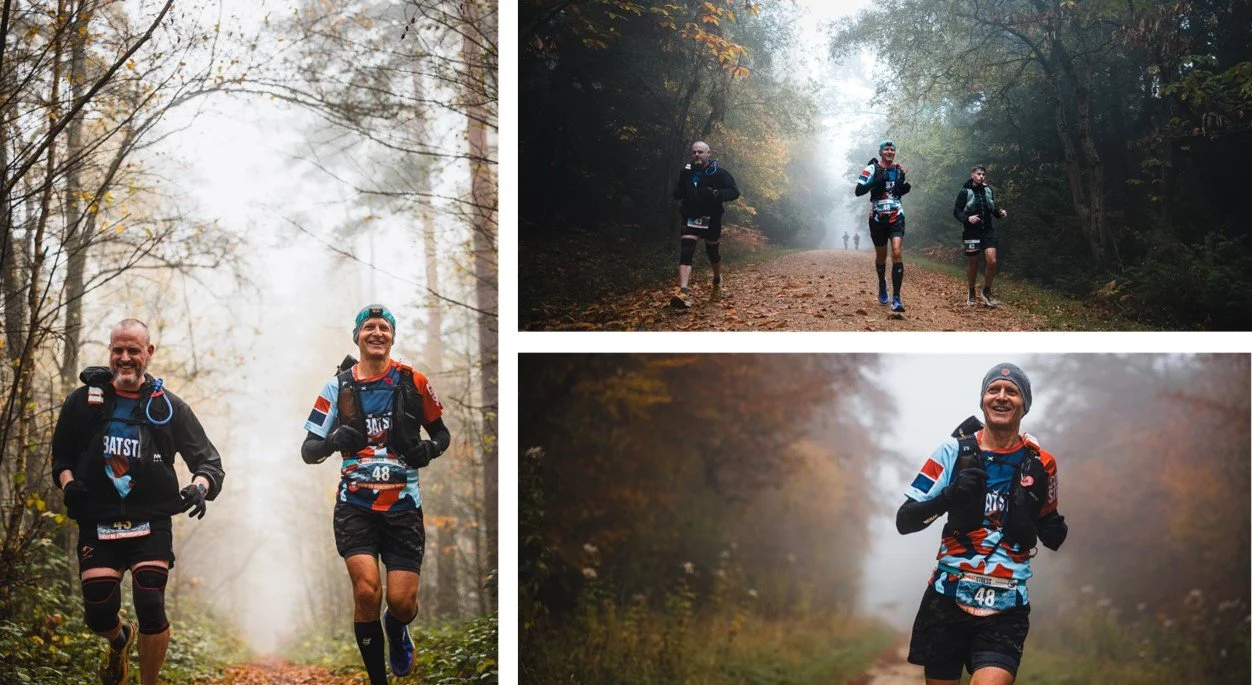
Around two kilometres beyond Petersfield came the big climb of the day, taking us over the South Downs. Just before it, I found an unexpected pocket of supporters cheering me on. What a lift! Thank you to Tracy, Suki, Betsy, Barney, my sister Sarah and her dog Molly, James and Kona. Seeing you there meant so much.
Walking uphill through the mist and fog was straightforward enough. With daylight came easier navigation, but the descent brought a different challenge: my quads were feeling the strain, with cramp threatening all the way down the ridge.
During the first half, I had shared the miles with Andy, an incredible ex-serviceman who had survived an IED explosion while on patrol in Afghanistan. Now we had gone our separate ways, and I was running solo. Later, Betsy, Barney and Suki would join me for parts of the route towards the finish—company I was grateful for as the miles began to bite.
When the miles began to bite
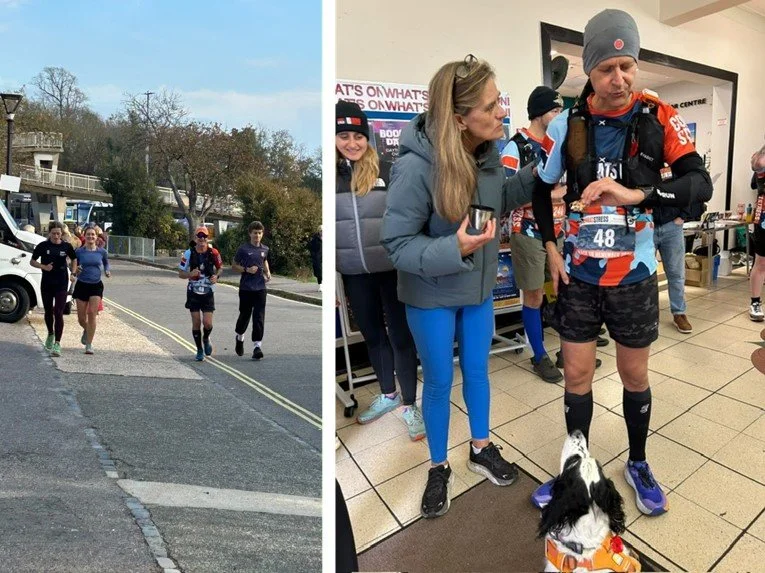
At the fourth stop, after 56km and with most of the trail behind me, I swapped my trail shoes for road shoes. I was now in fourth place and still feeling reasonably good. Over the next ten kilometres, though, that would change. What had felt manageable was becoming increasingly uncomfortable.
From 65km onwards, I was digging deep, determined to reach HMS Victory. Back in an urban setting, even ordinary obstacles felt enormous. Traffic lights interrupted my momentum, while road bridges became unwelcome climbs. My secret weapon? Smiling. It sounds simple, but in those tough moments it made a difference. JB in our pre-race chats had reminded me of the power of smiling during a race, indeed my late mum always said, “Smile and the world smiles with you!” A smile couldn’t take away the aching legs, but it helped me face the next stretch.
The finish I’ll never forget
Encouragement from passers-by and the honking of car horns kept me moving. Somehow, I even found a little more pace for the final couple of kilometres. Then I turned into the Naval Dockyard. The feeling was utterly amazing: my first ultra, my longest run, a finish I’ll never forget and ninth overall. The final distance was 78km—slightly more than advertised, courtesy of my early navigation adventures!
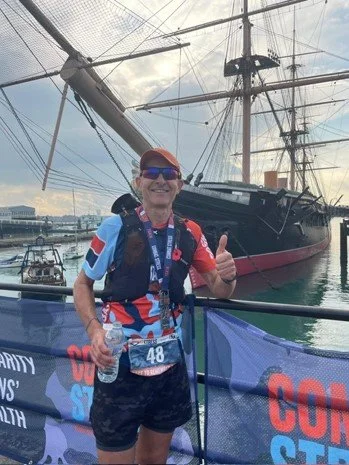
More than a finish line
What will stay with me isn’t just the distance. It’s the quiet of the early miles, the unexpected cheers before the climb, the company along the way and my family’s support when I needed it most. And, in those hard final kilometres, the reminder that a smile could still help.
Would I recommend the Race to Remember? Definitely. With its place at the end of the triathlon season, it could be a challenge on your calendar for next year. For me, it was a chance to turn something I’d been thinking about for months into something I’d actually done.
You don’t have to find every mile easy for the journey to be worth it. Some miles were comfortable; others took everything I had. Together, they made this a Race to Remember.
Find out more here: Race to Remember